
Cosmetic Dentistry
What is cosmetic dentistry?
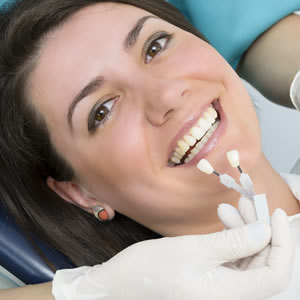
As the name suggests, cosmetic dentistry involves treatment to improve the appearance of the teeth. As well as crown and bridgework this can also involve the use of porcelain veneers, although even more conservative approaches are often possible such as tooth whitening (bleaching) and the careful use of tooth coloured filling materials (composite) to reshape the teeth.
Although the intention is to improve the appearance of the teeth, it is very important that treatment is carried out in such a way that the result is as functional and durable as possible. Careful planning is therefore needed and the patient’s input is obviously all-important.
As cosmetic treatment often involves restorations made in the laboratory it is also crucial to work closely with an excellent lab technician and wherever possible we get the patient and the technician to talk during the planning phase of treatment.
Treatment options
There are several treatment options available including tooth whitening, building up the tooth or teeth with composite (tooth coloured) filling materials, the provision of veneers, crowns and/ or bridges.
Another often-overlooked option is orthodontics. This can be the most suitable way of correcting cosmetic problems and although it may take longer than more invasive approaches, the long-term benefits may be large.
If orthodontics is a suitable option this should always be discussed.
Tooth Whitening (Bleaching)
In general terms tooth whitening can either be carried out in-surgery or at home.
Home bleaching
Home bleaching is done by the use of thin trays that are worn on the teeth, usually at night.
The time this takes obviously depends the starting point and how light patients want the teeth to go. It also depends on the food and drink that patients consume during this process.
It is usual to plan to bleach for 1-2 weeks of nighttime wear. The trays can then be kept and used to ‘top up’ the effect over a period of time.
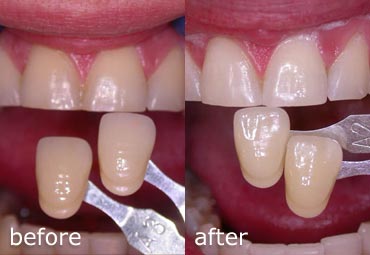
In-surgery bleaching (1 hour)
In-surgery bleaching
In-surgery bleaching is carried out in the dental chair and can usual be done in one session. This will normally take approximately 1 ½ hours.
The teeth are carefully isolated and a gel applied to the teeth, which is then activated with a bright light. This is often referred to as ‘laser bleaching’ although it is uncommon for the light source to actually be a laser.
Dr Sunnucks usually likes patients to have the ability to top up in-surgery bleaching and so usually supplies patients with trays for home use at the end of their treatment.
Composite fillings
Modern composite filling materials are durable and excellent aesthetically. It is often possible to achieve an undetectably good match with these materials, either to build up a broken tooth or to help to reshape teeth and/or disguise defects.
They can often be the treatment of choice in situations where patients have worn their teeth down and help to protect the remaining enamel and dentine.
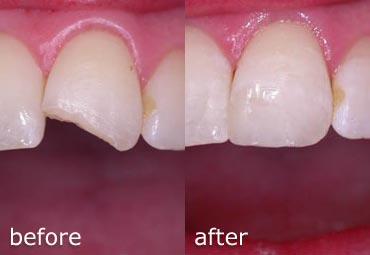
Examples of uses of composite to invisibly repair fractured tooth
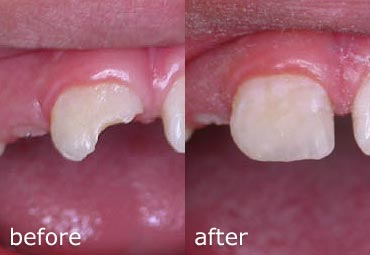
Examples of uses of composite to invisibly repair fractured tooth
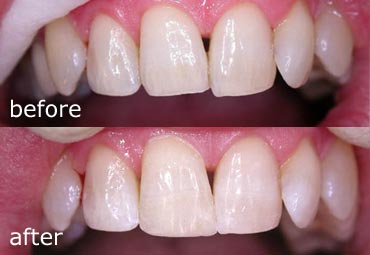
Use of composite to conservatively reshape teeth
Veneers
Veneers are thin shells of porcelain bonded to the outside surface of the teeth.
These can be used to change the colour and shape of the teeth and if well designed can help to improve the function as well as the appearance.
The results with well-made veneers can be exceptional creating a beautiful life-like smile.
The best bond is to enamel (rather than dentine) and so wherever possible we try to keep the preparation of the underlying tooth as minimal as possible.
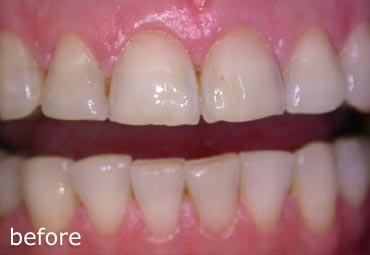
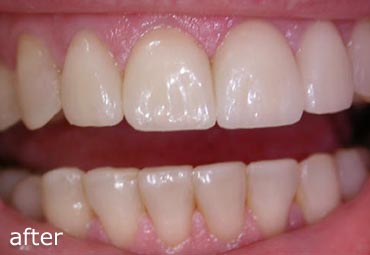
The careful use of porcelain veneers on the upper teeth (composite on the lowers)
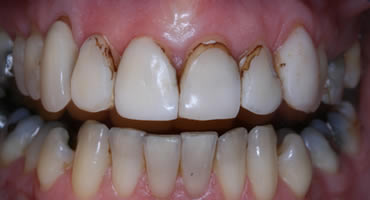
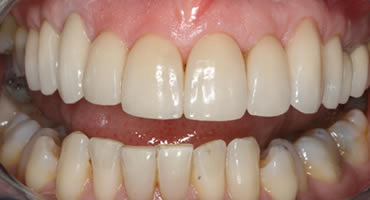
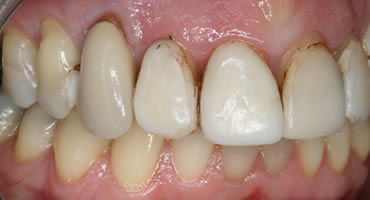
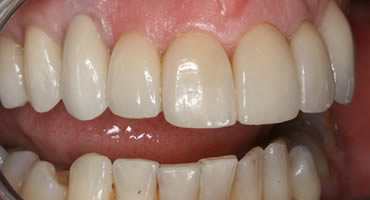
Replacement of failed veneers
FAQs
 What would be the best approach for me?
 Every single case is different and although experience gained from previous cases is very useful in treatment planning and in discussing cases, each case needs to be assessed on its own merits.
There will usually be an initial fact finding consultation followed in many cases by a meeting to discuss the findings and treatment ideas.
Following this a detailed treatment can be put together.
How much is treatment likely to cost?
Treatment is so varied this is almost impossible to answer prior to a proper examination and discussion.
In general terms composite build-ups are not only less invasive but also significantly less expensive that either veneers or crowns. There is the possibility that composite restorations will need more in the way of maintenance however and so long term the costs may not be vastly different.
If you would like a general ballpark estimate of costs you can email details of specific situation and if at all possible Dr Sunnucks will give you an idea of what may be involved.
How long do restorations last?
This is understandably one of the most commonly asked questions. The investment in cosmetic treatment can be significant and patients want to know how long it is likely to last.
Of course this is a very difficult question to answer as there are so many factors that may lead to failure of dental treatment in the longer term.
In general terms veneers should last in excess of 10 years and straightforward crown and bridgework 10-15 years or more.
Composite restorations can be very varied in their longevity but have the advantage that they can often be very successfully repaired or ‘freshened’ up if they have become stained.
The effects of whitening diminish over time and this is obviously dependent on many factors such as the food and drink that patients consume as well as whether they smoke or not. The effects are however relatively long lasting and most patients find that they only need to top up the treatment every few years.
What if I require other treatment before the cosmetic treatment can be carried out?
Our philosophy is very much a multidiscipline one, and if other treatment (such as gum treatment, placement of implants or orthodontics) is required prior to cosmetic treatment, this will be discussed and if appropriate can all be arranged ‘in-house’.
